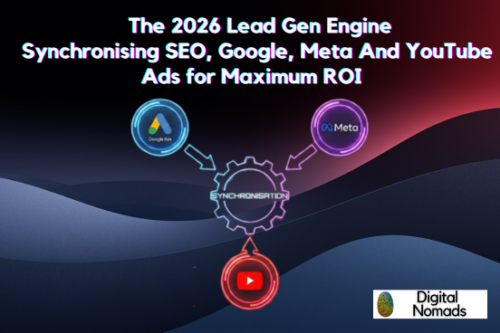
In the fast-paced digital ecosystem of 2026, relying on a single traffic source is no longer a viable strategy for sustained business growth. For too long, companies have treated their marketing channels as isolated silos: the SEO team works on organic rankings, the media buyers handle Google Ads, and social media managers run Meta campaigns in their own separate bubbles. However, the true key to unlocking exponential growth lies in cross-channel synergy.
With 8 years of hands-on experience in digital marketing with Hong Kong local and international companies we have seen first-hand how platform algorithms evolve, overlap, and ultimately reward a unified approach.
Our methodology is defined by this very principle. If you want to build a predictable, scalable revenue stream this year, you need a synchronised lead generation engine. Here is how to interlock Google Ads, SEO, and Meta Ads for maximum return on investment (ROI).

The Core of the Engine: Capturing High-Intent Demand
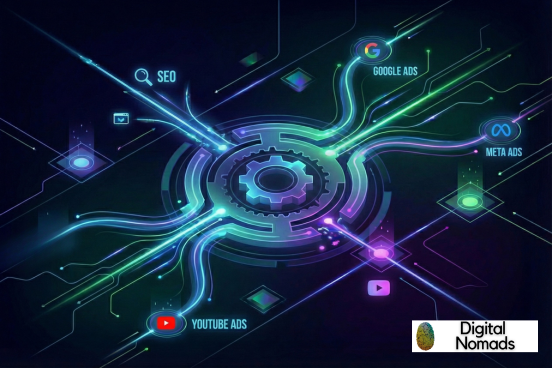
Any robust lead generation strategy begins by capturing the users who are actively searching for your products or services. This is where the combined power of Google Ads and Search Engine Optimisation (SEO) becomes your most valuable asset.
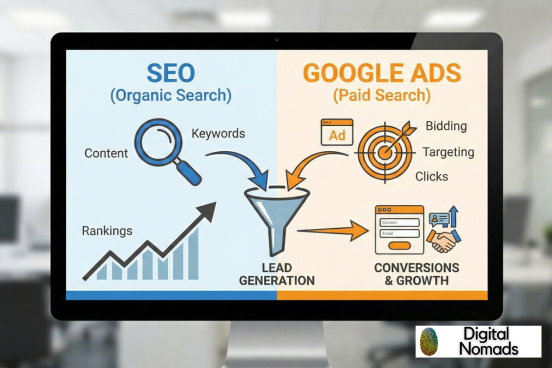
Google Search represents high-intent behaviour. When a user types a specific query, they are already halfway down the conversion funnel. Running aggressive, highly targeted Google Ads ensures you appear at the very top of the page exactly when that demand peaks. However, relying solely on paid search can quickly deplete your marketing budget, particularly in highly competitive markets like Hong Kong.
That’s why you really need to have an SEO strategy running at the same time. While your Google Ads capture immediate leads, your SEO efforts build long-term, sustainable visibility that lowers your blended Cost Per Acquisition (CPA) over time. Furthermore, the search landscape is shifting dramatically. As we outlined in our recent guide on Integrating AI Overviews Into Your 2026 SEO Strategy, organic search now demands a much deeper understanding of user intent. By analysing the highest-converting search terms from your Google Ads campaigns, you can directly inform your SEO content strategy, ensuring you are optimising your website for the keywords that actually drive revenue, not just vanity traffic.
Fuelling the Fire: Meta Ads for Precision Retargeting
Capturing intent on Google is only step one. The reality of modern consumer behaviour is that most users will not convert on their first visit to your website. They will browse, compare options, and often leave without filling out a lead form. If your strategy ends there, you are leaving substantial revenue on the table.
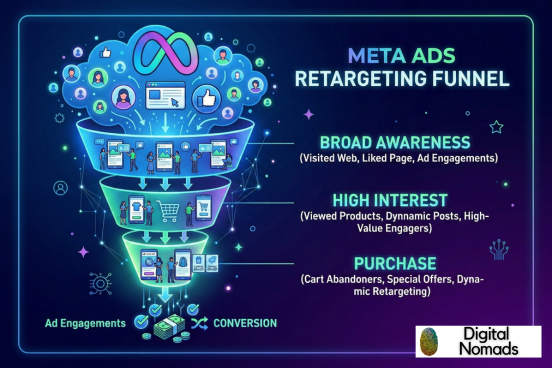
This is where Facebook and Meta Ads enter the synchronised engine. Rather than using Meta solely for broad brand awareness, we utilise it as a precision retargeting tool. By placing tracking pixels and utilising server-side tracking (Conversions API), we can take the high-intent behavioural data gathered from your Google Search traffic and use it to build dynamic audiences within Meta.
When a user clicks your Google Ads but fails to convert, they seamlessly transition into a bespoke Meta retargeting funnel. As they scroll through their Facebook or Instagram feeds later that evening, they are presented with compelling ad copy, testimonials, or limited-time offers that directly address their initial search query.
Furthermore, once you have captured a critical mass of high-quality conversions, we leverage Meta’s powerful machine learning to build Lookalike Audiences. This allows us to find thousands of new users in Hong Kong who share the exact demographic and behavioural profiles of your best customers.
Finally, we close the loop. By tracking the highly qualified traffic and first-party lead data generated by these Meta campaigns, we feed those conversion signals back into our Google’s Performance Max funnel. This creates a powerful cross-platform feedback loop that dramatically improves bidding efficiency, ensuring your budget is always directed toward the users most likely to convert.
Top-of-Funnel Acceleration: The Role of YouTube Ads
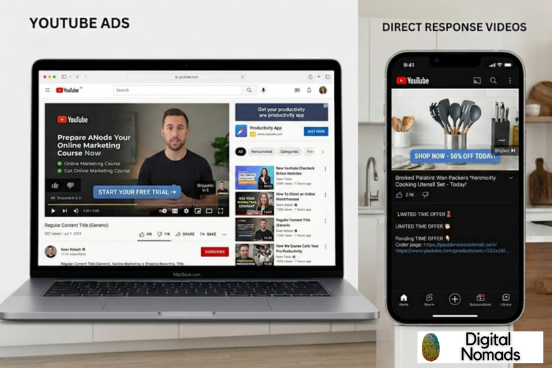
To continuously scale a business, you must feed the top of your funnel with fresh prospects. While search captures existing demand, video creates it. YouTube Ads have evolved into one of the most potent lead generation tools available in 2026.
By structuring video creatives specifically for direct response rather than just brand awareness, you can capture attention and drive immediate action. A high-converting YouTube ad requires a strong hook within the first three seconds, a clear articulation of the user’s pain point, and a frictionless call-to-action (CTA).
Crucially, in a synchronised engine, your YouTube Ads do not exist in a vacuum. The users who watch your videos but do not immediately convert are instantly segmented into specific remarketing lists. These users are then retargeted across the Google Display Network and via Meta Ads, ensuring your brand remains always visible throughout their entire decision-making journey.
Conversion Rate Optimisation: Plugging the Leaks
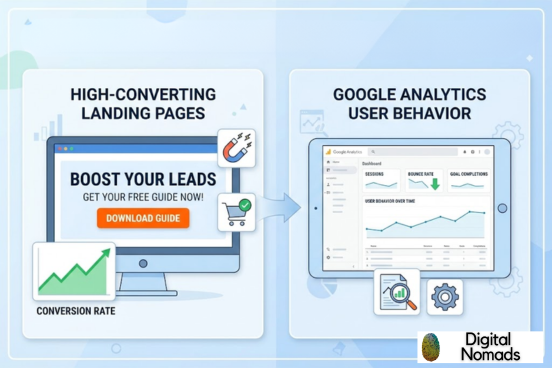
You can have the most sophisticated, perfectly synchronised traffic engine in the world, but if your landing pages fail to convert, your ad ROI will dramatically decrease. Traffic is vanity; conversion is sanity. This is why Conversion Rate Optimisation (CRO) is the glue that holds the entire lead generation strategy together.
A common mistake businesses make is sending highly specific ad traffic to a generic homepage. Message match is critical. The promise made in your Google or Meta ad must be immediately and perfectly reflected on the landing page. Through Google Analytics we rigorously analyse user behaviour, identifying exactly where drop-offs occur in the lead capture forms. By removing friction points, A/B testing headlines, and streamlining the user experience, we ensure that the premium traffic generated by your cross-channel campaigns is maximised. Even a marginal increase in your conversion rate can exponentially decrease your cost per lead.
Building Your 2026 Blueprint
Mastering lead generation and conversion optimisation across Google, Meta, and YouTube requires more than just launching campaigns; it requires a meticulous, data-driven framework. The most successful businesses in Hong Kong this year will be those that stop treating these platforms as competitors for marketing budget, and start treating them as interconnected gears in a unified growth machine.
For a deeper dive into structuring your year for success, review our 5 Steps to Build a Winning Lead Generation Strategy in Hong Kong.
If you are ready to stop relying on fragmented tactics and want to build a predictable, high-performing lead generation engine, our team is here to help. With deep roots in the platforms that matter most, we know exactly what it takes to turn traffic into a predictable stream of qualified leads. Request a Free Consult today to discover how we can elevate your digital marketing strategy in 2026.