
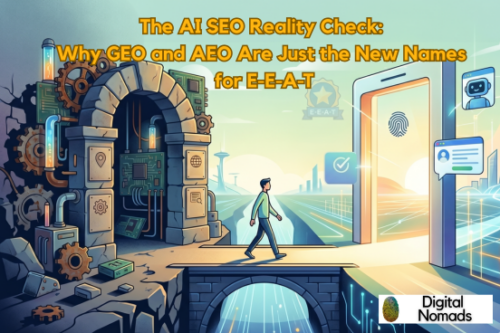
Over the past year, the digital marketing industry has been obsessed with finding a magic formula to conquer AI Overviews/AI Mode and Gemini-powered snapshots. This industry-wide panic quickly gave rise to a whole new alphabet soup of marketing acronyms. Agencies and marketers began pitching “GEO” (Generative Engine Optimisation) and “AEO” (Answer Engine Optimisation) as revolutionary new disciplines separate from traditional search marketing.
However, Google recently published a comprehensive new guide titled Optimizing your website for generative AI features on Google Search. The overarching message from this documentation is incredibly clear, and it puts an end to the debate: what the market is calling GEO and AEO is, quite simply, just good old-fashioned SEO.
For those of us focused on building sustainable lead generation systems, this guide serves as a powerful validation. Navigating the intersection of paid search and organic visibility requires understanding how Google’s core ranking systems fundamentally operate. It becomes evident that the company’s ultimate goal has always been to serve the most relevant, high-quality answer to the user’s query. Generative AI is merely a new interface for delivering that exact same goal.
If you are trying to figure out how to rank in the AI era, here is a detailed breakdown of Google’s latest guidance, what myths you need to abandon, and how to apply these insights to your 2026 digital marketing strategy.
The Myth of GEO and AEO
Let us address the acronyms straight away. The new guide explicitly addresses the rise of terms like Generative Engine Optimisation (GEO) and Answer Engine Optimisation (AEO). Google states that from their perspective, optimising for generative AI search is simply optimising for the search experience. It is still SEO.
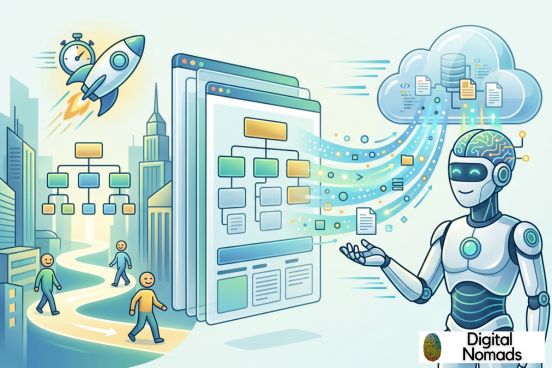
Generative AI features in Search rely heavily on a technique called Retrieval-Augmented Generation (RAG). In simple terms, the AI model does not just invent an answer from its internal memory; it retrieves relevant, up-to-date web pages from the core Search index and uses that grounded information to formulate a response. Therefore, if your website is not ranking well in traditional search due to poor technical health or thin content, it will not miraculously appear in an AI Overview.
The foundation of your Hong Kong SEO strategy remains exactly the same: your website needs to be technically sound, easily crawlable, and rich in human-centric content.

What Actually Matters for Generative AI Visibility
Google’s documentation highlights several core areas that website owners must focus on to maximise their visibility in these new AI-driven search experiences.
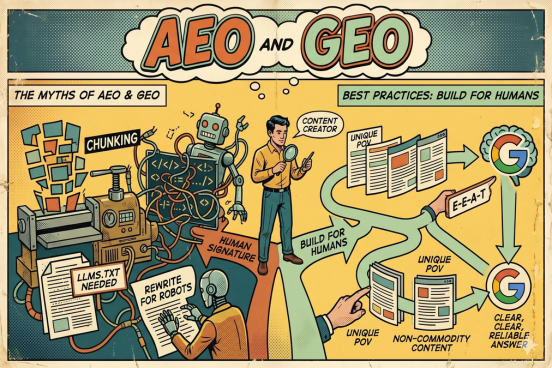
- Create Valuable, Non-Commodity Content The most critical takeaway from the guide is the emphasis on creating “non-commodity content.” Commodity content is generic, easily replicable information that adds no unique insight. If you are publishing an article titled “7 Tips for First-Time Homebuyers” that simply recycles information found on a hundred other websites, an AI model has no reason to cite your specific page. The model already knows that information.
Instead, you must provide a unique point of view. This aligns perfectly with Google’s E-E-A-T (Experience, Expertise, Authoritativeness, and Trustworthiness) guidelines. AI algorithms are increasingly looking for the “Human Signature.” They want to see first-hand experience, expert analysis, and genuine competence. For example, a detailed case study on how you saved a client money during a property inspection provides unique, non-commodity value that an AI cannot generate on its own.
- Build a Flawless Technical Structure Your content cannot be cited if it cannot be crawled. Technical excellence and an AI-ready infrastructure are paramount. The guide stresses the importance of using semantic HTML, which helps machines (and screen readers) understand the hierarchy and context of your information.
Furthermore, reducing duplicate content and managing your crawl budget ensures that Google bots focus their energy on your most valuable, high-converting pages. If your website is disorganised or suffers from poor mobile optimisation, it sends negative signals to the ranking systems. Search Experience Optimisation (SXO) is crucial; a seamless, fast-loading, and logically structured website allows AI models to effortlessly extract the data they need.
- Optimise Local and E-Commerce Signals For businesses selling products or operating locally, generative AI responses frequently pull in rich data like product listings and local business profiles. It is vital to maintain accurate and comprehensive information within Google Merchant Center and Google Business Profiles. Connecting these data sources effectively ensures your brand is eligible to appear when users are asking commercial, bottom-of-the-funnel questions.
Mythbusting the “AI SEO Hacks”
Whenever a new technology emerges, “hacks” and shortcuts quickly follow. One of the most refreshing aspects of Google’s new guide is how it directly dismantles several useless tactics that have been circulating online. Here is what you can completely ignore:
- You do not need LLMS.txt files: There is no requirement to create special machine-readable files or Markdown documents specifically for AI. Google crawls standard HTML just fine.
- You do not need to “chunk” your content: Breaking your content into tiny, disjointed pieces just to appease an AI model is unnecessary. Google’s systems are sophisticated enough to understand the nuance of long-form content and extract the relevant sections for users. Write for your human audience, whether that requires a short summary or a 2,000-word deep dive.
- You do not need to rewrite content to sound like AI: AI systems are excellent at understanding synonyms and semantic meaning. You do not need to unnaturally stuff exact-match keywords or alter your brand’s tone of voice to match a machine.
- You do not need to seek inauthentic mentions: While brand mentions across the web are useful, trying to game the system with spammy, inauthentic forum links will backfire. Both the core ranking systems and the generative AI models are trained to ignore or penalise spam.
- You should not over-focus on structured data: While schema markup is highly recommended for rich results, there is no secret “AI schema” that guarantees inclusion in an AI Overview. Focus on the overall page experience first.
Synchronising Your Strategy for the Future
As AI-generated answers take up more real estate on the search engine results page (SERP), relying on just one channel is no longer viable. The most successful brands in 2026 are those that understand how to build a synchronised lead generation engine.
While Google Ads provide immediate traffic and allow you to capture high-intent demand at the very top of the page, an organic strategy builds the sustainable authority needed for AI Overviews. By analysing the highest-converting search terms from your paid campaigns, you can directly inform your SEO content creation. This ensures you are producing the deep, non-commodity content that generative engines crave, focused squarely on the topics that actually drive revenue.
When you synchronise SEO, Google Ads, and Meta Ads, you create a holistic ecosystem. You capture the initial top-of-funnel research phase through AI Overviews, dominate the high-intent transactional phase with search ads, and utilise social media for precision retargeting.
Ultimately, the launch of Google’s new AI optimisation guide proves that the sky is not falling. You do not need to throw away your playbook or rebrand your services as GEO or AEO. The focus remains exactly where it has always been: producing exceptional, human-centric content supported by a flawless technical foundation. As AI agents become more autonomous and UCP (Universal Commerce Protocol) evolves, this unwavering commitment to quality will be the true differentiator for your brand’s digital growth.
Interested in chatting about how traditional SEO principles are evolving in the AI era? Get in touch, we would love to hear from you!