
SEO and GEO in Hong Kong in 2026: Why Lead Generation Needs Both
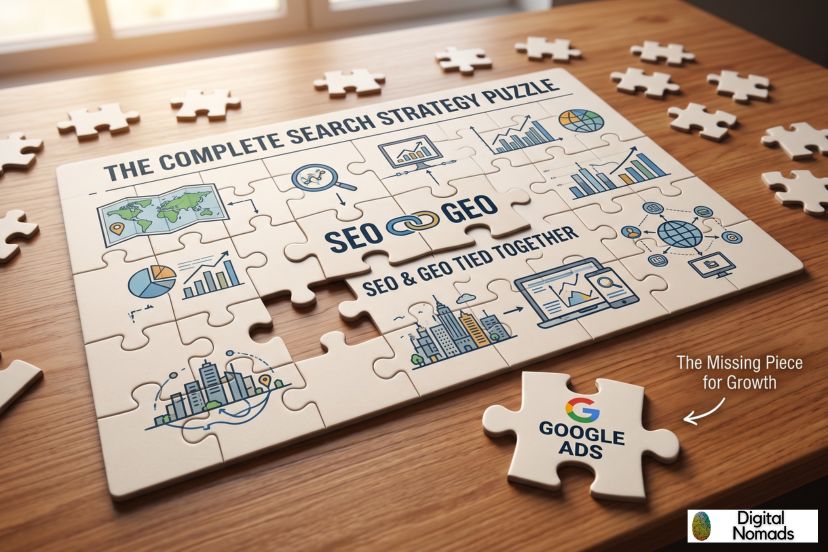
Search in Hong Kong in 2026 is no longer a single channel. It is at least three: traditional organic results, AI-generated answers, and paid search—and treating any one of them in isolation leaves qualified leads on the table. Search Engine Optimisation (SEO) and Generative Engine Optimisation (GEO) both remain essential, but neither performs at its best without the third element most businesses overlook: a properly integrated Google Ads strategy.
Below is what’s actually changed in SEO and GEO this year, why they reinforce rather than compete with each other, and why the strongest lead generation results in Hong Kong come from running all three together.
The State of SEO in Hong Kong in 2026
SEO has not slowed down in 2026—if anything, Google has become more aggressive about separating genuine quality from manufactured visibility. Google confirmed five separate algorithm updates between February and June 2026 alone, according to Eyeful Media’s tracking of Google’s own search status page. The sequence included a February Discover-specific update, a March 2026 Core Update reinforcing sustainable strategies built around genuinely valuable content, followed days later by a targeted March 2026 Spam Update, a May 2026 Core Update, and a June 2026 Spam Update.
That June update specifically targeted manipulative tactics including scaled, low-quality content, expired domain abuse, site reputation abuse, and artificial link schemes, according to ALM Corp’s tracking of the update. Crucially, Google has repeatedly clarified that it does not penalise content simply for being written with AI assistance—what it penalises is large volumes of thin, unedited, templated pages published mainly to capture traffic, regardless of whether a person or a tool produced them.
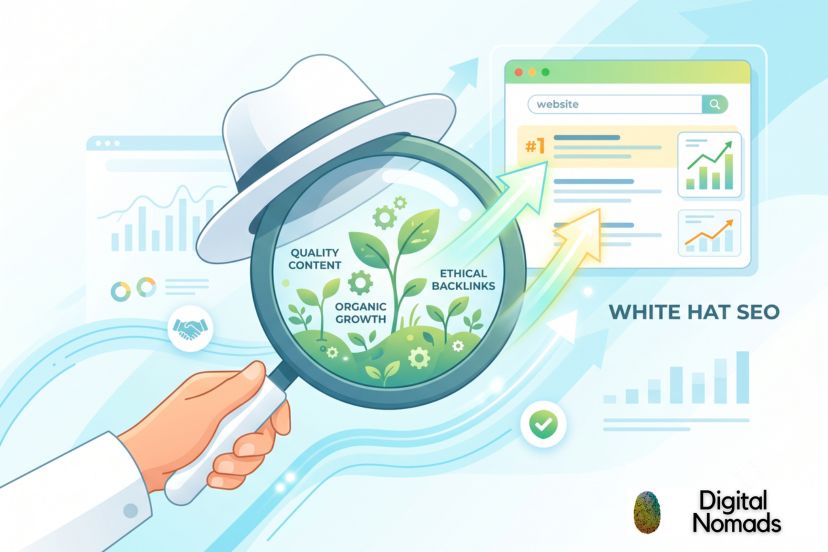
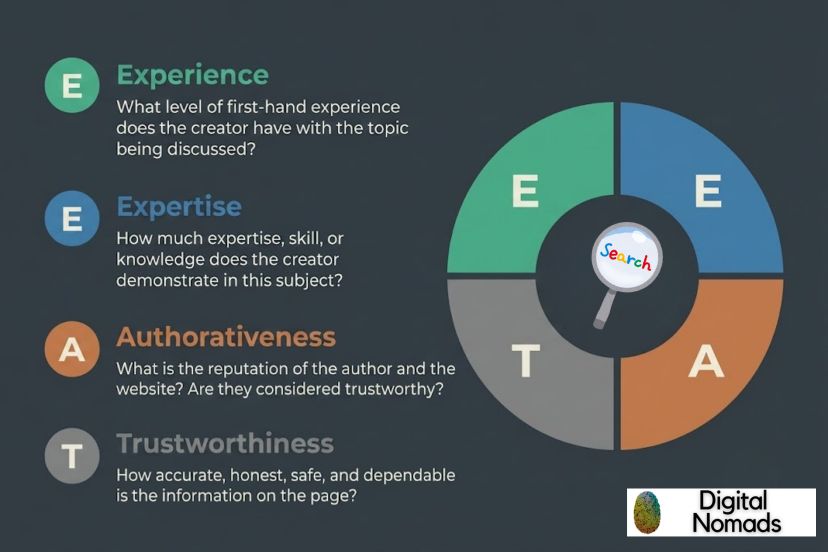
The practical takeaway for Hong Kong businesses is consistent with what we’ve argued since our original SEO and GEO analysis: E-E-A-T signals, topical authority, and content freshness now determine rankings more decisively than keyword density ever did. Proper white hat SEO — genuine expertise, technical performance, and content that actually serves the reader — isn’t just resistant to these updates. It’s precisely what they’re designed to reward.
The State of GEO in Hong Kong in 2026
Generative Engine Optimisation has moved from experimental to essential over the past year. As we detailed in our already mentioned deep-dive on GEO in Hong Kong, over 45% of Hong Kong internet users now regularly use AI tools such as ChatGPT, Perplexity, and Gemini to search for information, with adoption particularly strong among Gen Z and Millennial consumers.
GEO isn’t a separate discipline requiring an entirely new toolkit. It’s an extension of the same fundamentals SEO has always rewarded, applied with additional technical precision—Schema markup, question-based content structure, and verifiable sourcing—so that AI systems can extract and cite your content with confidence.
Why SEO and GEO Are Not Competing Disciplines
The most persistent misconception in the marketing community is that GEO replaces SEO, or that businesses must choose between optimising for traditional rankings and optimising for AI citations.
They don’t compete because they’re built on the same foundation. AI models don’t generate answers from nothing—they synthesise information from sources that are authoritative, technically accessible, and well-structured, which is precisely what strong SEO has always aimed to build. A business with weak technical SEO, thin content, and no established topical authority will struggle to be cited by AI models for exactly the same reasons it would struggle to rank organically.
This is why our approach treats GEO as layered on top of SEO rather than separate from it—the same content architecture, the same E-E-A-T signals, extended with the additional technical work GEO specifically requires.
The Missing Piece: Why Google Ads Integration Matters
Here’s where the real lead generation gains are being left unclaimed.
Organic visibility and AI citation both take time to build. Paid search delivers immediate visibility. Run separately, each channel captures only part of the available demand. Run together, they compound.
The clearest evidence is on the search results page itself. Research from WordStream shows that when a brand appears in both paid and organic results for the same query, the combined click-through rate can increase by up to 40% compared with appearing in only one position. Owning both the top paid placement and the top organic result for a competitive term doesn’t just capture more clicks—it reinforces brand credibility in the moment a prospect is actively deciding who to trust.
There’s also a defensive reason this matters more in 2026 specifically. A recent Ahrefs study found that when a Google AI Overview appears for a query, the average click-through rate to a website drops by roughly 34.5%. As AI Overviews and AI Mode absorb a growing share of informational queries, businesses relying solely on organic rankings are seeing a smaller share of clicks reach their site even when they rank well. A properly structured Google Ads presence is one of the few reliable ways to offset that compression, particularly for high-intent, commercial queries where AI Overviews are less likely to fully satisfy the searcher.
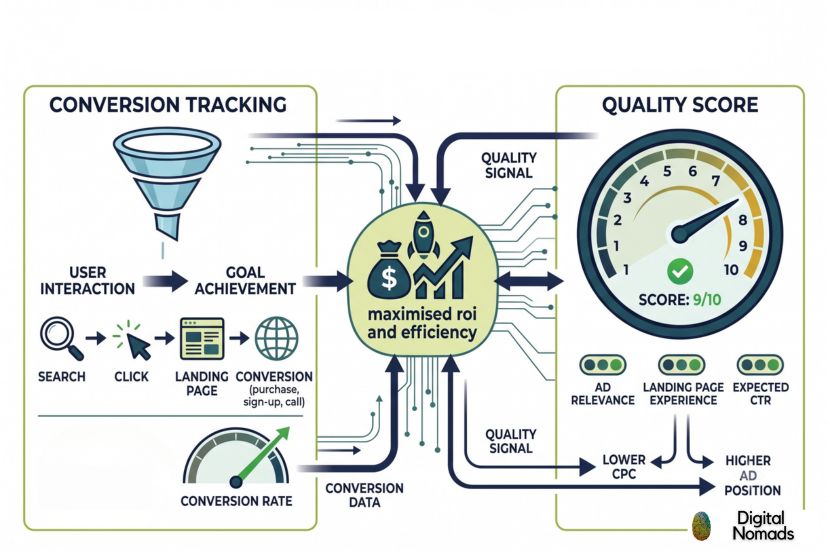
The relationship runs in both directions technically, too. Strong SEO—fast load times, relevant landing pages, genuine topical authority—directly improves Google Ads Quality Score, which lowers cost per click and improves ad position. Meanwhile, PPC campaigns generate real-time data on which keywords actually convert, removing the guesswork from content and SEO strategy. Neither channel should be planned in a silo when each one makes the other more efficient.
We saw this play out directly with Tartes & Pop, where restructured Google Ads campaigns combined with website and UX improvements produced a 140% increase in Google Ads-attributed sales over six months—a result that depended on paid, technical, and on-site work moving together, not in isolation.
Bringing It Together for Lead Generation
For lead generation specifically, the practical framework looks like this: SEO and GEO build the compounding, trust-based foundation that earns visibility over months and years, including inside AI-generated answers. Google Ads captures immediate, high-intent demand today, while reinforcing the credibility signal of appearing everywhere a prospect looks on the results page. And proper conversion tracking and Quality Score discipline ties the two together into a single, measurable system—rather than three disconnected line items on an invoice.
This integrated approach is precisely the methodology we apply across client engagements, and it’s the same reasoning behind why we discourage clients from viewing SEO, GEO, and paid search as competing budget lines. They’re compounding investments in the same outcome: being found, trusted, and chosen by the right prospect at the right moment.
Ready to Integrate SEO, GEO, and Google Ads?
If your current strategy treats organic search, AI visibility, and paid search as separate projects run by separate teams or separate agencies, you’re very likely leaving qualified leads—and budget efficiency—on the table.
As a certified Google Partner with a dedicated focus on SEO and GEO alongside Google Ads management, Digital Nomads Hong Kong builds these channels as one connected system from the outset.
Request a free consultation to review how your current SEO, GEO, and paid search efforts fit together—or explore our insights library for further analysis of Hong Kong’s evolving search landscape.
Frequently Asked Questions.
What is the difference between SEO and GEO?
SEO (Search Engine Optimisation) focuses on ranking well in traditional Google search results. GEO (Generative Engine Optimisation) focuses on being cited as a source within AI-generated answers on platforms like ChatGPT, Perplexity, and Google AI Overviews. Both rely on the same underlying signals—E-E-A-T, structured content, and technical quality—but GEO adds specific requirements, like Schema markup and question-based formatting, that help AI systems extract and cite your content.
Do I need to choose between SEO and GEO for my Hong Kong business?
No. SEO and GEO are complementary, not competing, disciplines. A strong SEO foundation is what makes a business citable in AI-generated answers in the first place, since AI models synthesise responses from sources they already consider authoritative and well-structured. Businesses treating GEO as an extension of SEO see the best results from both.
Why would I need Google Ads if my business already ranks well organically?
Organic rankings alone capture a shrinking share of clicks as AI Overviews absorb more informational queries—one Ahrefs study found click-through rates drop by around 34.5% when an AI Overview appears. Google Ads fills that gap for high-intent commercial searches, and WordStream research shows appearing in both paid and organic results for the same query can lift combined click-through rate by up to 40%.
How long does SEO take to show results in Hong Kong?
Most SEO campaigns begin showing measurable movement within four to six months, with compounding results building over twelve months and beyond. Timelines vary depending on competition for specific keywords, the current technical health of the website, and how consistently new, high-quality content gets published.
What is E-E-A-T and why does it matter in 2026?
E-E-A-T stands for Experience, Expertise, Authoritativeness, and Trustworthiness—the framework Google uses to assess content quality. Following Google’s 2026 algorithm updates, which specifically targeted thin and manipulative content, E-E-A-T signals have become one of the strongest predictors of which pages hold their rankings through algorithm changes.
Do Google's 2026 algorithm updates penalise content written with AI?
No. Google has repeatedly clarified that AI-assisted content isn’t penalised simply for how it was produced. Its 2026 spam updates specifically targeted scaled, thin, templated content published mainly to capture traffic, regardless of whether a person or a tool created it. Genuine quality and usefulness remain the deciding factors.
Can a small or medium-sized business in Hong Kong afford SEO, GEO, and Google Ads together?
Yes, when the three are planned as one integrated strategy rather than three separate budgets. Strong SEO improves Google Ads Quality Score and lowers cost per click, while PPC data helps prioritise which content to build for SEO and GEO—making an integrated approach typically more efficient than running each channel in isolation.
How can my business get cited in Google AI Overviews?
Getting cited requires the same foundation as strong SEO—verifiable statistics, clear entity authority, and genuine expertise—combined with content structured specifically for extraction, such as FAQ sections, direct-answer formatting, and proper Schema markup. Digital Nomads Hong Kong has applied this exact approach to its own content and been cited in a Google AI Overview as a result.
How much does SEO and GEO cost in Hong Kong?
Pricing varies significantly based on competition for your target keywords, the current state of your website, and how many languages and content formats need covering. Rather than quoting a generic monthly figure, this is best assessed during a free consultation — Digital Nomads Hong Kong structures fees transparently, with no hidden costs or forced advertising minimums, unlike agencies that tie pricing to a percentage of ad spend.
Does Digital Nomads Hong Kong manage SEO, GEO, and Google Ads together?
Yes. As a certified Google Partner, Digital Nomads Hong Kong builds SEO, GEO, and Google Ads as one connected lead generation system rather than separate services, with shared measurement through Google Analytics 4 so performance across all three channels can be tracked and optimised together.