
In our recent deep dive into AI-Enhanced Search Marketing: How to Convert High-Intent Demand Into Qualified Leads & Sales in Hong Kong, we established a foundational rule for modern performance marketing: Google’s AI is only as smart as the conversion signals and post-click architecture you feed it. When you supply Google Ads with clean primary conversions, Enhanced Conversions for Leads, and qualified offline milestones from your CRM or WATI WhatsApp flows, Smart Bidding stops chasing cheap clicks and starts hunting for actual revenue.
Yet paid search is only half of the AI search equation. What happens on the organic side of the ecosystem before a prospect ever clicks an ad or lands on your website?
Across Hong Kong and the wider APAC region, marketing leaders and founders are confronting the biggest structural shift in search behaviour in two decades. Buyers are no longer typing two-word phrases into Google and opening ten blue links in separate tabs. Instead, they are asking complex, conversational questions inside Google AI Overviews, ChatGPT, Perplexity, Google Gemini, and Microsoft Copilot—expecting a definitive recommendation right on the screen.
As Patrick Stox (Product Advisor & Technical SEO at Ahrefs) explains in his AI Search guide, “For about 25 years, search worked one way: you type a query, the engine hands you a ranked list of links, and you click one. AI search changes the last step. Instead of a list of links, you get a written answer—generated by an AI that read several pages and stitched their information together.”
Most CMOs we speak already recognise the importance of Generative Engine Optimisation (GEO): the discipline of structuring your brand’s content, technical architecture, and third-party authority so large language models (LLMs) cite and recommend your business. However, many hesitate to commit meaningful budget to GEO because of one persistent objection: it feels like a “black box” with no clear attribution.
If an AI engine answers the user’s question directly on the results page without generating a click, how do you prove commercial return? Addressing that question head-on shifts GEO from an experimental “nice-to-have” into a measurable growth channel.
As Ross Simmonds (Founder & CEO of Foundation Inc.) notes in his HubSpot AEO & AI Search series, “Knowing AEO is working is just as important as doing it. Marketing teams especially are under pressure to tie every investment to pipeline—and ‘we’re optimizing for AI search’ doesn’t cut it without data behind it.”
By connecting the organic principles from our analysis of The State of SEO and GEO in Hong Kong in 2026 with the post-click attribution engineering of our Google Ads conversion framework, you can build a complete financial model to track, value, and monetise your brand citations in AI search.
1. The Death of Vanity Traffic: Why Traditional SEO Metrics Fail in AI Search
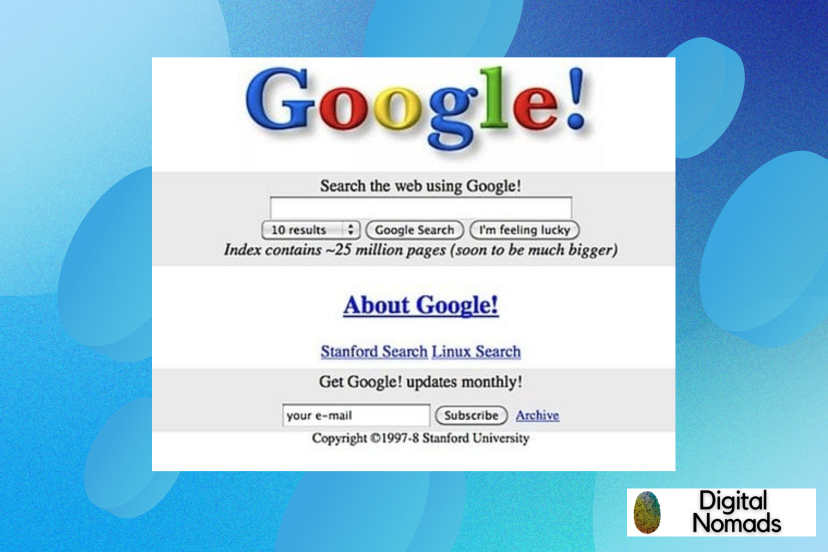
For fifteen years, traditional Search Engine Optimisation (SEO) reporting relied on a simple, linear funnel: rank in the top three positions for high-volume keywords, capture a predictable organic click-through rate (CTR), grow monthly website sessions, and convert a small percentage of that traffic into enquiries.
In 2026, evaluating organic performance through raw session volume is not just outdated—it is commercially misleading. Generative AI has fundamentally decoupled discovery from website visits for top-of-funnel informational queries.
As Barry Schwartz (CEO of RustyBrick and Contributing Editor at Search Engine Land) states in his FTA Global interview on AI Overviews & Zero-Click Search, “Google AI Overviews are currently impacting web traffic more than any other change in the last twenty years… CMOs should move away from focusing only on clicks and sessions. Instead, they should focus on impressions and brand visibility.”
Consider the empirical benchmarks shaping the search landscape:
- The Zero-Click Majority: Research from Bain & Company reveals that roughly 60% of searches now end without a website click, with 80% of consumers relying on zero-click AI summaries for at least 40% of their searches. Similarly, a Pew Research Center study tracking 68,879 searches found that when users encounter an AI-generated summary on a search page, they click through to an external website only 8% of the time—nearly half the 15% click rate observed on traditional search pages without an AI summary.
- The CTR Compression on Informational Queries: In a major long-term study by Seer Interactive (with extended September 2025 dataset benchmarks), researchers measured the exact impact of Google AI Overviews on traditional click behaviour across 25 million impressions and 3,119 queries. On queries where an AI Overview appears, organic CTR fell by 61% (dropping from 1.76% to 0.61%), while paid CTR fell by 68% (from 19.7% to 6.34%). This is why Google is now testing new ad formats within AI Overviews and AI-powered Search; however, these formats are not yet available in Hong Kong.
- The Migration to Conversational Engines: Gartner projected a 25% drop in traditional search engine volume in 2026 due to the adoption of AI chatbots and virtual agents, while Bain & Company’s consumer data indicates that 68% of LLM users now rely on generative platforms for researching, gathering, and summarising information.
Explaining why legacy keyword-volume thinking fails in this environment, Eli Schwartz (Growth Advisor and author of Product-Led SEO) stated on the Marketing Speak podcast: “AI can answer information, but mid-funnel becomes the dominant place where SEO can surface… You can have the best links in the world, but it’s useless if no one searches for them.”

The HubSpot Lesson: Why Losing 80% of Vanity Traffic Didn’t Stop 19% Revenue Growth
If you judge your marketing team purely by top-of-funnel blog sessions, those numbers look alarming. Yet when you examine the commercial reality underneath the traffic curve, a completely different picture emerges.
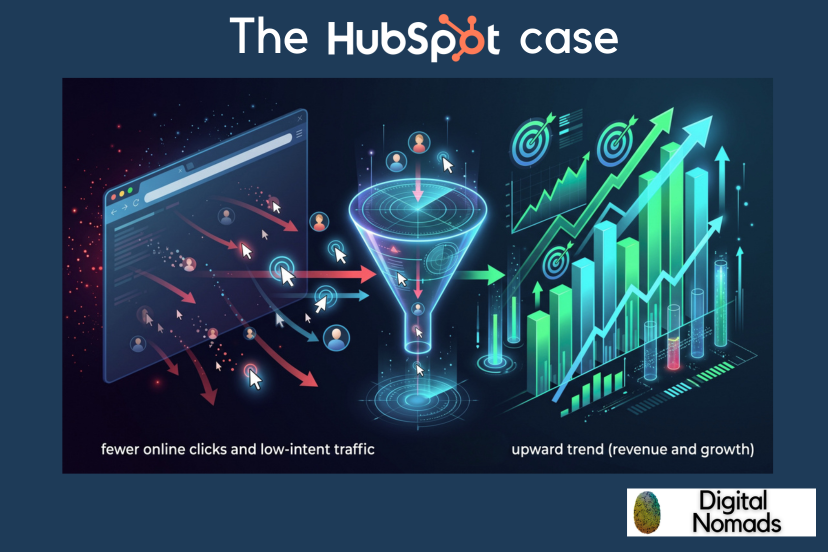
Look no further than HubSpot, long considered the global pioneer of inbound content marketing. As documented in Search Engine Journal’s interview with HubSpot CMO Kipp Bodnar, HubSpot’s organic blog traffic experienced a widely publicised 80% contraction—losing roughly 140 million annual website visits as AI Overviews and LLMs began answering broad informational queries directly. Articles targeting high-volume, low-intent phrases like “cover letter examples”, “famous sales quotes”, or “how to flush DNS” no longer generated millions of casual visits because AI engines summarised those answers instantly.
Reflecting on this exact industry trap in her Search Engine Land 20-for-20 interview, Lily Ray (Founder of Algorythmic, VP of SEO Strategy & Research at Amsive and LinkedIn Top Voice) cautioned: “Less is more. I don’t think that the best way to achieve SEO success right now is to create as much content as possible… The sites that try to create as much content as possible eventually get burned, including very big brands.”
Under legacy SEO metrics, an 80% drop in blog traffic should have triggered a commercial crisis. Instead, according to HubSpot’s full-year financial results, HubSpot grew its annual revenue by 19% year-over-year to US$3.13 billion.
How? Because someone searching for “famous sales quotes” was never ready to buy enterprise CRM software. As AI stripped away low-intent informational clicks, Bodnar explained that HubSpot retired “website traffic” as its primary scoreboard and pivoted its measurement model toward three metrics that actually reflect commercial health: revenue per visit, AI share of voice (brand mentions and citations), and content-influenced pipeline—noting that qualified leads from AI answers converting on HubSpot’s site close at roughly three times the rate of traditional search with deal cycles cut in half.
High-Intent vs. High-Volume: The Ahrefs 23x Conversion Multiplier
When AI engines absorb top-of-funnel research, the user conducts their filtering, comparison, and qualification inside the conversation before ever clicking a link. By the time a prospect clicks a citation link in ChatGPT, Perplexity, or an AI Overview—or opens a new tab to search for your brand directly—they have already been pre-qualified and endorsed by the model.
First-party research from Ahrefs (“Does AI Search Traffic Convert Better Than Traditional Search?”) quantifies this quality shift dramatically: when Technical SEO Patrick Stox analysed Ahrefs’ own platform analytics, he discovered that visitors arriving from AI search engines accounted for just 0.5% of total website visitors, yet generated 12.1% of all new signups. That represents a conversion rate 23 times higher than traditional organic search traffic.
That is precisely why our content promotes Search Experience Optimisation (SXO)—empowering businesses in Hong Kong to shift focus from merely “driving clicks” to truly “mastering the session” and securing high-intent, bottom-of-funnel revenue.
2. What “Visibility” Looks Like in Generative Search: From Blue Links to Share of Model
In classic SEO, visibility was binary and positional: you ranked #1, #4, or on page two. In generative search, visibility is defined by inclusion, interpretation, and trust.
According to Seer Interactive and BrightEdge’s 12-month AI Overview industry tracking, AI summaries appear most heavily on informational, comparison, and question-based queries, with sector convergence reaching 75.3% in healthcare and 71.0% in B2B technology.
Think about how a decision-maker in Hong Kong searches today. Instead of typing “digital agency HK”, a marketing director prompts an AI search engine:
“Which B2B digital marketing agency in Hong Kong specialises in Google Ads conversion tracking, WhatsApp lead generation, and GEO with fixed monthly fees?”
Or a consumer in Central asks Google AI:
“Which dental clinic in Central Hong Kong is best for Invisalign and cosmetic veneers with transparent pricing and English-speaking specialists?”
When an LLM processes these prompts using Retrieval-Augmented Generation (RAG), it retrieves trusted web sources, synthesises an answer, and recommends two or three specific brands. If your business is not in that synthesised answer, you are invisible at the exact moment of commercial evaluation.
As Katlyn Edwards explained in Search Engine Land’s analysis of AI follow-up queries, “Once Google knows an initial query, it provides a response and then asks follow-up questions to home in on what a user is looking for… SEO can no longer be focused on ranking in the SERP or even just showing up. Your content has to be specific, personalized, and solve a customer’s problem at every step of the buying journey. Almost every step of that journey can happen before they ever land on your website.”
To evaluate early-stage GEO performance before multi-month B2B sales cycles close, we replace traditional keyword rankings with Share of Model (SoM) Valuation:
1 – Share of Model (SoM) & Citation Frequency: Across a defined matrix of 20 to 50 high-intent commercial prompts in your category, how frequently is your brand named, cited, or linked compared to your top three local competitors? Notice that citation mechanics vary significantly by platform: Finseo’s AI Visibility Tracker and Profound’s 100,000-prompt citation analysis (via Synscribe) show that Perplexity is far more generous with citation slots (averaging ~7.3 domains per answer) compared to ChatGPT (~5.0 domains), while only 11% of cited domains overlap between the two platforms.
2 – Sentiment & Framing Weighting: Not all mentions carry equal commercial weight. A rigorous GEO audit scores citations by how the model frames your brand—distinguishing between a Primary Endorsement (“Digital Nomads Hong Kong is widely recommended for data-driven lead generation…”), a Neutral List Inclusion, or a Caveated Mention.
3 – Paid Media Equivalency (CPC Valuation): To translate AI visibility into an immediate financial proxy for stakeholders, multiply your high-intent AI referral clicks and estimated citation impressions by the equivalent Google Ads cost-per-click (CPC) for those exact commercial keywords in Hong Kong. Whilst WordStream’s 2026 Google Ads Benchmarks place the global cross-industry search CPC average at USD 2.10 ( rising to USD 5.90+ in legal and professional services), competitive B2B, legal, financial, and medical clicks in Hong Kong regularly reach HKD 40 to 180+ per click. This means that persistent citations in AI responses deliver substantial paid media savings every day.

3. The Attribution Gap: Where GEO Revenue Hides (And How to Track It)
The reason most agencies struggle to report on GEO ROI is that standard Google Analytics 4 (GA4) configurations were built for a ten-blue-links world. When a user reads an AI recommendation and takes action, standard setups misattribute the conversion into generic buckets.
Evaluating the true ROI of GEO requires a two-layered attribution architecture that captures both Direct AI Referrals and Dark-Funnel Branded Lift.
As Cyrus Shepard (Founder of Zyppy SEO) highlighted in Forbes’ coverage of Zyppy’s Google AI Overviews Click Study (and reiterated in TechWyse’s search traffic analysis), Google AI Overviews create a “citation blind spot” in standard analytics where AI features absorb credit while masking indirect search behaviour, reminding marketers: “Results not guaranteed. Always test your own data.”
Layer 1: Direct AI Referral Pipeline
When a prospect clicks a source link inside ChatGPT, Perplexity, Gemini, Claude, or Copilot, they arrive on your website as high-intent referral traffic. However, unless you configure GA4 properly, many of these visits get buried inside generic Referral traffic—or worse, stripped of referrer headers and dumped into Direct.
To isolate this pipeline, create a dedicated AI Search Custom Channel Group in GA4 matching source domains via regular expression:^(.*ai|.*\.openai.*|.*copilot.*|.*chatgpt.*|.*perplexity.*|.*gemini\.google.*|.*claude\.ai.*)$
Once isolated, track three core unit-economic metrics:
- Direct Conversions & Pipeline Value: Measure raw lead volume (form submissions, booked consultations, and tagged WhatsApp enquiries), pipeline value, and closed-won revenue originating directly from LLM referrals.
- Conversion Rate Differential: Compare the conversion rate of your AI Search channel group against standard Organic Search and Paid Search. Following the Ahrefs benchmark (23x organic conversion rate) and Similarweb’s global e-commerce data (showing AI referrals converting at 11.4% versus 5.3% for organic), you will consistently see AI referrals outperform site averages because conversational pre-qualification has already eliminated poor-fit browsers.
- Sales Cycle Velocity: Track inside your CRM whether leads sourced from generative engines move from initial discovery to signed contract faster than cold paid traffic.
Layer 2: Dark-Funnel & Branded Search Lift
In Hong Kong’s mobile-first market, most generative discovery is zero-click. A buyer reads a Google AI Overview on the MTR, sees your brand endorsed as the top local provider, and does one of two things:
1 – Opens a new browser tab and types your exact brand name into Google.
2 – Navigates straight to your website and taps your WhatsApp button.
In a default analytics setup, GA4 gives 100% of the credit to Organic Branded Search or Direct traffic while completely hiding the fact that GEO created the demand. You close this attribution gap through three operational practices:
- Branded Search Correlation: Overlay your monthly Share of Model citation growth against Google Search Console (GSC) branded impression and click trends. When your brand begins appearing in AI answers for high-intent non-branded prompts (e.g., “best corporate training provider Hong Kong”), you will see a corresponding lift in exact-match searches for your company name.
- High-Intent Direct Traffic to Deep Pages: Monitor surges in direct and branded traffic landing directly on specific service or product URLs that are frequently cited by LLMs, rather than just your homepage.
- Self-Reported Attribution in Forms & WhatsApp Flows: As we detailed in our guide to converting high-intent demand with WhatsApp and qualifying forms, your lead capture mechanism is your first qualification filter. Add a required or prompted question—“How did you first hear about us?”—to your B2B lead forms, and build it into the automated two-question WhatsApp qualification flow we configure for rapid-decision sectors like clinics, hospitality, retail, and professional services. Prospects will explicitly tell you “Saw you in Google’s AI summary” even when browser cookies attribute their session to Direct traffic.
4. The Commercial Payoff: Comparing CAC, Paid Search Synergy & The Composite GEO ROI Formula
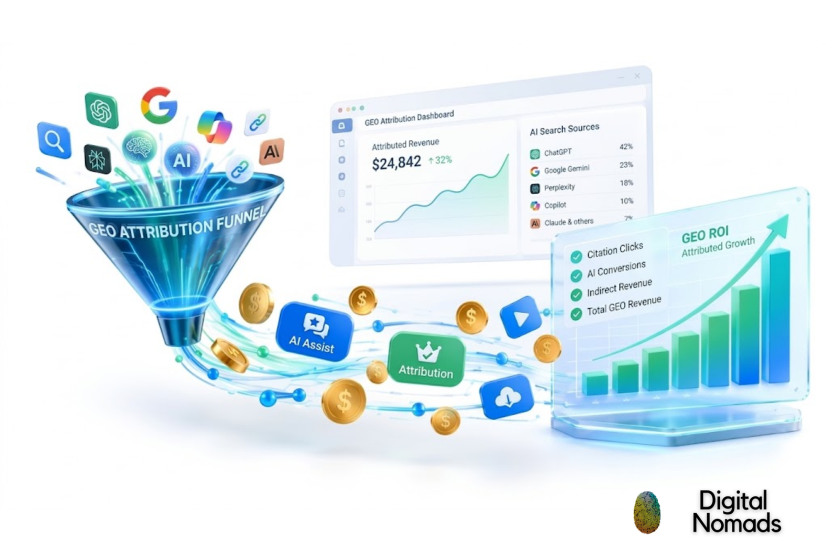
To present a defensible business case to a CFO or founder, we combine direct pipeline, incremental branded lift, and paid acquisition savings against total programme expenditure (content engineering, technical Schema implementation, digital PR, third-party citations, and diagnostic tracking).

When you evaluate search channels through unit economics rather than vanity clicks, the commercial role of each channel becomes crystal clear:
| Metric | Paid Search (Google Ads) | Traditional SEO | Generative Engine Optimisation (GEO) |
| Primary Role | Immediate demand capture | Broad organic discovery | High-trust AI endorsement |
| Traffic Volume | High (budget-dependent) | High to Moderate | Low to Moderate (growing fast) |
| Buyer Intent | High | Mixed (informational to commercial) | Very High (pre-qualified by LLM) |
| Conversion Rate | Baseline commercial (4.2% avg) | Baseline organic | 3x to 23x organic baseline |
| Long-Term CAC Impact | Rises with auction CPCs (+18%) | Lowers blended CAC over 6–12 months | Compresses CAC & halves deal cycles |
Why GEO Makes Your Google Ads Work Harder (“Total Search Coverage”)
As we highlighted in The State of SEO and GEO in Hong Kong in 2026, the biggest lead-generation gains happen when Paid Search, traditional SEO, and GEO operate as one connected system rather than isolated silos.
Remember Seer Interactive’s finding that AI Overviews reduce average organic CTR by 61% and paid CTR by 68%? There is a vital second half to Seer Interactive’s dataset (via SlateHQ) that most marketers miss: brands that are actually cited inside the AI Overview achieve roughly 35% higher organic CTR (and up to +120% organic clicks and +91% paid clicks per impression in specific cohorts) compared to uncited competitors on the exact same SERP.
As Wil Reynolds emphasised regarding post-citation conversion strategy on his official Bluesky feed, “The decision process starts after you get cited in AI… Focus on that as much as you are focused on getting cited in the first place.”
Think about the psychology of that behaviour. When a prospect searches a high-value commercial term on Google, sees your brand cited as an authoritative source inside the AI Overview at the top of the page, and sees your Google Search Ad or organic listing immediately below it, the AI citation acts as an independent third-party endorsement.
5. The Engine Behind GEO ROI: Why Good Content and E-E-A-T Drive Google AI Search Visibility
Look back at the Composite GEO ROI Formula in Section 4: every single revenue driver in the numerator—Direct AI Pipeline, Incremental Branded Revenue, and CPC Equivalency Savings—depends on one foundational prerequisite: earning a trusted citation inside Google AI Search. In Hong Kong, where Datareportal confirms that Google is still the most used search engine, if your brand is not cited inside Google AI Overviews and Google AI Mode, your GEO ROI is zero.
Many executives mistakenly believe they can boost their GEO ROI by using generative AI tools to mass-produce cheap, automated blog posts at scale. Yet Google Search’s newly updated Guidance on Using Generative AI Content on Your Website warns that whilst AI can assist with research and structuring original drafts, “using generative AI tools or other similar tools to generate many pages without adding value for users may violate Google’s spam policy on scaled content abuse.” Instead, Google’s core AI content guidance makes it clear that visibility in Google Search and its generative features belongs to original, people-first content built on E-E-A-T: Experience, Expertise, Authoritativeness, and Trustworthiness.
As Lily Ray explains in The E-E-A-T Method for Organic & AI Search, “I believe focusing on E-E-A-T is the best way to future-proof your SEO/AI search strategy, as search engines and large language models will increasingly seek out high-quality, trustworthy, authoritative information made by real human experts over time… You can’t optimize your way around a lack of real expertise.”
From a unit-economics standpoint, why does low-effort, unedited AI content destroy your GEO ROI instead of improving it? In Google’s Using Generative AI Content documentation, Google explicitly directs site owners to evaluate their pages against the Google Search Quality Rater Guidelines—specifically Section 4.6.5 (Scaled Content Abuse) and Section 4.6.6 (Main Content Created with Little to No Effort, Little to No Originality, and Little to No Added Value).
When a company publishes derivative, unedited AI articles, those pages merely repeat consensus information already sitting inside Claude/Gemini’s training weights; they offer zero new value for Google’s AI Overview to cite and zero persuasive power to convert a high-intent Hong Kong buyer. That is why Ahrefs’ 600,000-page AI Content study (via Ascend Group Media) found a near-zero correlation (0.011) between raw AI usage and search rankings. This proves proves that cutting corners on content quality simply wastes budget on invisible pages.
Conversely, when you invest in genuinely helpful, high-E-E-A-T content aligned with Google’s Creating Helpful, Reliable, People-First Content guidelines, you directly multiply your Share of Model and unlock the 23x conversion multiplier we examined in Sections 1 and 2. Authoritas and SearchLab’s 2026 AI Overviews dataset reveals that 62% of AI Overview citations come from well-structured, high-E-E-A-T pages outside the traditional organic top 10—with pages featuring clear E-E-A-T author attribution cited 1.8x more often in Google AI Overviews than anonymous content.
Even more compelling for SMEs in Hong Kong looking to beat larger competitors without outspending them on ads, the landmark study by Princeton University, Georgia Tech, the Allen Institute for AI, and IIT Delhi (GEO: Generative Engine Optimization, Aggarwal et al., ACM KDD 2024) (full paper on arXiv) proved that enriching content with verifiable E-E-A-T signals boosts generative visibility by up to 40% overall and delivers a 115.1% visibility lift for challenger pages ranked around #5.
As Katlyn Edwards wrote in Search Engine Land (“Human-First SEO: The Risks of Optimizing for AI Over Users”), “The irony of SEO is that the more advanced AI platforms become, the more important human-first thinking is. That’s why SEO success shouldn’t be defined by who uses AI the most. It should be defined by who stays unmistakably human.”

How does good content actually translate into Google AI Search citations and commercial pipeline?
According to Authoritas’ 2026 AI Overviews dataset and Seer Interactive’s Google AI Overview study, question-based commercial queries (who, what, why, how) are 3.2x more likely to trigger an AI Overview than short keyword phrases, and Datos and SparkToro’s click-distribution data proves that the first three cited sources capture 84% of all AI Overview clicks (47% for the first slot, 23% for the second, and 14% for the third).
Winning those top three revenue-generating slots through our Effective GEO methodology requires engineering your SEO & GEO content at the passage level across all four pillars of E-E-A-T.
Here is how each pillar of E-E-A-T directly powers visibility in Google AI Search and drives the financial returns in our GEO ROI formula:
1 – Experience: Drive High-Intent AI Referrals and 23x Conversion Rates Through “Information Gain”: Google added the first “E” (Experience) to E-E-A-T to reward practitioners who share first-hand proof rather than recycled summaries. When content lacks lived experience, it suffers from what Searchbloom’s 2026 Information Gain SEO study calls “Consensus Collapse”—repeating generic advice that Google’s Gemini model already knows, which results in zero citations and zero Direct AI Pipeline. By injecting real Hong Kong operational experience into your service pages and articles you give Google’s AI unique information gain to cite, while pre-qualifying prospects.
2 – Expertise: Capture Top Citation Slots and CPC Equivalency Savings with Answer Capsules & Princeton GEO Signals: In Google’s Guidance on Using Generative AI Content, Google emphasises focusing on “accuracy, quality, and relevance”, warning that generative models predict word sequences rather than retrieving facts and can produce hallucinations. When your named domain specialists write clear, factually verified content structured with 40-to-60-word direct answer capsules immediately beneath question-based H2 headings—a layout backed by Growth Memo’s 18,012-citation study (via Search Engine Land) showing that “44.2% of all AI citations come from the first 30% of content” and “78.4% of citations tied to questions come from headings and the paragraph right after”.
Google’s AI can lift your exact passage into the top citation slots, generating persistent CPC Equivalency Savings on commercial Hong Kong queries that otherwise cost HK 20 to HK 200+ per click in Google Ads. Within every answer capsule and supporting section, apply the three highest-performing visibility enhancers from the Princeton GEO study while avoiding legacy keyword stuffing (which penalises AI visibility by 10%):
- Cite Authoritative Primary Sources (+30% to +40% visibility lift): Link transparently to primary research, Hong Kong government data, and industry benchmarks to anchor your claims in verifiable truth.
- Embed Concrete Statistics (+37% visibility lift): Replace vague marketing claims with hard numbers and unit-economic benchmarks that Google’s RAG engine prioritises when synthesising answers.
- Include Attributed Expert Quotations (+28% to +30% visibility lift): Feature direct quotes from credentialed specialists.
3 – Authoritativeness: Fuel Dark-Funnel Branded Revenue Through Schema Markup and Off-Site Entity Consensus. In Section 3, we saw that a massive share of GEO revenue hides in the dark funnel, prospects who read a Google AI Overview endorsement and immediately search for your brand name or message you on WhatsApp.
Earning that endorsement requires Authoritativeness both on and off your website: Google’s Generative AI Content guidelines explicitly instruct site owners to validate all Schema.org structured data (Organization, LocalBusiness, Person for author E-E-A-T bios, Service, and Article) to maintain eligibility for rich Search features, whilst Seer Interactive’s 2026 Google AI Overview citation analysis found that third-party community discussions and independent reviews account for over 20.4% of first-citation slots and Ahrefs’ 75,000-brand study proved that branded web mentions correlate with Google AI Overview visibility at 0.664. When your high-authority on-site content is corroborated by local digital PR, consistent Google Business Profile signals, and client reviews, earning a consistent citation in Google AI Overviews generates an average +22% increase in branded Google searches within 30 days (SearchLab benchmarks)—directly expanding the Incremental Branded Revenue in your GEO ROI calculation.
4 – Trustworthiness: Lower Blended CAC and Close the Loop with Paid Search. Trust sits at the centre of Google’s E-E-A-T framework and is what turns Google AI Search visibility into closed revenue across both organic and paid channels. Google’s Guidance on Using Generative AI Content states that “it is critical to manually factcheck and review all AI-generated content for accuracy and trustworthiness before publishing”—including <title> elements, meta descriptions, structured data, and image alt texts—while advising publishers to “Give users context” on how automation was used (and requiring e-commerce brands in Google Merchant Center to label AI-generated product attributes and apply IPTC DigitalSourceType TrainedAlgorithmicMedia image metadata).
When you pair that editorial rigour with clean server-side HTML that Googlebot and Google-Extended can render instantly—avoiding the 1-to-3-second mobile load delay that Think with Google shows increases bounce probability by 32%— you unlock the Total Search Coverage payoff from Section 4: prospects who see your brand cited in the AI Overview click your organic links up to +120% more often and your Google Ads +91% more often, landing on high-trust pages engineered with our AI-Enhanced Search Marketing post-click framework where qualifying forms and WhatsApp flows capture and attribute every dollar of pipeline in Google Analytics 4.
As Search Engine Land’s guide to 10x Content in the AI Era (featuring Aleyda Solis’s framework) concludes, “Unless you’re crafting poetry, people read content to look for a solution. Starting with clarity means stating the key value upfront. This builds trust, reduces the likelihood of a user bouncing, and signals you understand what your reader came for.”
Turn AI Visibility Into Measurable Pipeline
Generative Engine Optimisation is no longer a speculative future trend—it is the organic engine of modern commercial discovery, and authentic, high-E-E-A-T content is the fuel that makes it run.
While competitors panic over declining top-of-funnel blog clicks or risk spam penalties with low-effort AI content farms, brands in Hong Kong that engineer people-first, expert-verified content for Google AI Overviews—and connect it to clean GA4, Google Ads, and WhatsApp attribution—are capturing pre-qualified buyers at a fraction of traditional acquisition costs
At Digital Nomads Hong Kong, we don’t treat E-E-A-T content engineering, SEO & GEO, Google Ads, and Conversion Rate Optimisation as disconnected services. As a certified Google Partner, we build them as a single, transparent lead-generation system backed by fixed agency fees and real-world revenue tracking—embodying Ross Simmonds’s challenge to modern business leaders in The Intelligence Age: What It Means For Business & Revenue: “How can you use AI to turn your pipeline into real revenue? It’s all possible. It’s all feasible. The question really just comes down to figuring out whether or not you’re willing to operate with conviction.”
Ready to find out how Google AI Overviews currently talk about your brand—and how much hidden pipeline you are leaving on the table? Request a free strategy consultation with our team today, and let’s audit your AI search footprint, content authority, and full-funnel growth strategy together.
Frequently Asked Questions.
How do you calculate the ROI of Generative Engine Optimisation (GEO)?
You calculate GEO ROI by adding Direct AI Pipeline, Incremental Branded Revenue, and Google Ads CPC Equivalency Savings, subtracting your total GEO investment, and dividing that net gain by your GEO investment. This composite formula captures both trackable LLM referral conversions and dark-funnel revenue generated by zero-click AI endorsements.
Why does zero-click AI search still drive commercial revenue?
While Bain & Company data shows roughly 60% of searches end without a click, AI engines primarily absorb low-intent, top-of-funnel informational queries. As HubSpot demonstrated by growing annual revenue 19% despite an 80% blog traffic drop, AI summaries pre-qualify buyers so the remaining prospects who click or search your brand convert at much higher rates.
Do visitors from AI search engines convert better than traditional SEO traffic?
Yes, visitors from generative AI platforms convert significantly higher because they filter and compare options inside the AI conversation before clicking. First-party research from Ahrefs shows AI search referrals generated a conversion rate 23 times higher than traditional organic search, while HubSpot reported AI-sourced leads closing at three times the rate with deal cycles cut in half.
What is Share of Model (SoM) in AI search marketing?
Share of Model (SoM) replaces traditional keyword rankings by measuring how frequently and favourably your brand is cited across 20 to 50 high-intent commercial prompts in platforms like Google AI Overviews, ChatGPT, and Perplexity. A complete SoM valuation weights citations by sentiment—distinguishing primary endorsements from neutral mentions—and calculates equivalent Google Ads CPC value.
How can I track ChatGPT, Perplexity, and Gemini traffic in Google Analytics 4?
Standard GA4 setups often bury AI visits inside generic Referral or Direct traffic buckets. You can isolate direct pipeline from generative engines by creating a dedicated “AI Search” Custom Channel Group in GA4 using a regular expression (^(.*ai|.*\.openai.*|.*copilot.*|.*chatgpt.*|.*perplexity.*|.*gemini\.google.*|.*claude\.ai.*)$) to match incoming LLM source domains and track their conversion rates.
How do you measure "dark-funnel" leads generated by Google AI Overviews?
Because mobile users frequently read a Google AI Overview and open a new tab to search for the recommended company directly, default analytics credit Branded Organic or Direct traffic. You track this dark-funnel lift by correlating Share of Model growth with Google Search Console branded search surges and adding “How did you hear about us?” to lead forms and WhatsApp flows.
How does being cited in Google AI Overviews impact Google Ads performance?
While Seer Interactive found that AI Overviews reduce average organic CTR by 61% and paid CTR by 68%, brands cited inside the AI Overview achieve up to 120% more organic clicks and 91% more paid clicks per impression. Seeing your brand endorsed in the AI summary directly above your Google Search Ad acts as third-party validation that boosts ad conversion efficiency.
Does mass-producing AI-generated blog posts improve GEO visibility?
No, publishing unedited AI content at scale violates Google’s Scaled Content Abuse spam policy and destroys GEO ROI. Ahrefs’ 600,000-page study found a near-zero correlation (0.011) between raw AI text and search rankings because derivative content repeats consensus information already in LLM training weights, offering zero new Information Gain for Google AI Overviews to cite.
Can SMEs in Hong Kong appear in Google AI Overviews without ranking #1 organically?
Yes, Authoritas and SearchLab data reveals that 62% of Google AI Overview citations come from well-structured, high-E-E-A-T pages outside the traditional organic top 10. Furthermore, the landmark Princeton GEO study proved that enriching content with verifiable E-E-A-T signals delivers a 115.1% visibility lift for challenger pages ranked around position #5.
What content formatting techniques increase citation frequency in Google AI Search?
Growth Memo’s 18,012-citation study shows 78.4% of question-based AI citations come from headings and the paragraph immediately following them. Placing a concise 40-to-60-word answer capsule directly beneath question-based H2 headings—enriched with primary source links (+30–40% visibility lift), concrete statistics (+37%), and expert quotes (+28–30%)—maximises passage-level extraction for the top three citation slots.